

Practical Guide to Reinforcing Bars in Concrete Construction
In reinforced concrete construction, the proper selection and application of reinforcement bars (rebars) is a critical factor in ensuring structural integrity, long-term performance, and construction efficiency. This blog offers a comprehensive guide on reinforcing bar diameters, reinforcing bar couplers, rebar sizes tables, and practical aspects of using reinforcement bar for concrete. Whether you’re a structural engineer, site supervisor, or detailer, understanding the intricacies of reinforcement can significantly improve design-to-execution outcomes.
What Is a Reinforcement Bar?
A reinforcement bar, commonly referred to as rebar, is a steel bar used to increase the tensile strength of concrete. Since concrete is very strong in compression but weak in tension, adding rebar allows the structure to resist tensile and shear stresses effectively. Rebars are typically made from carbon steel and have a surface pattern (deformations) to improve bonding with concrete.
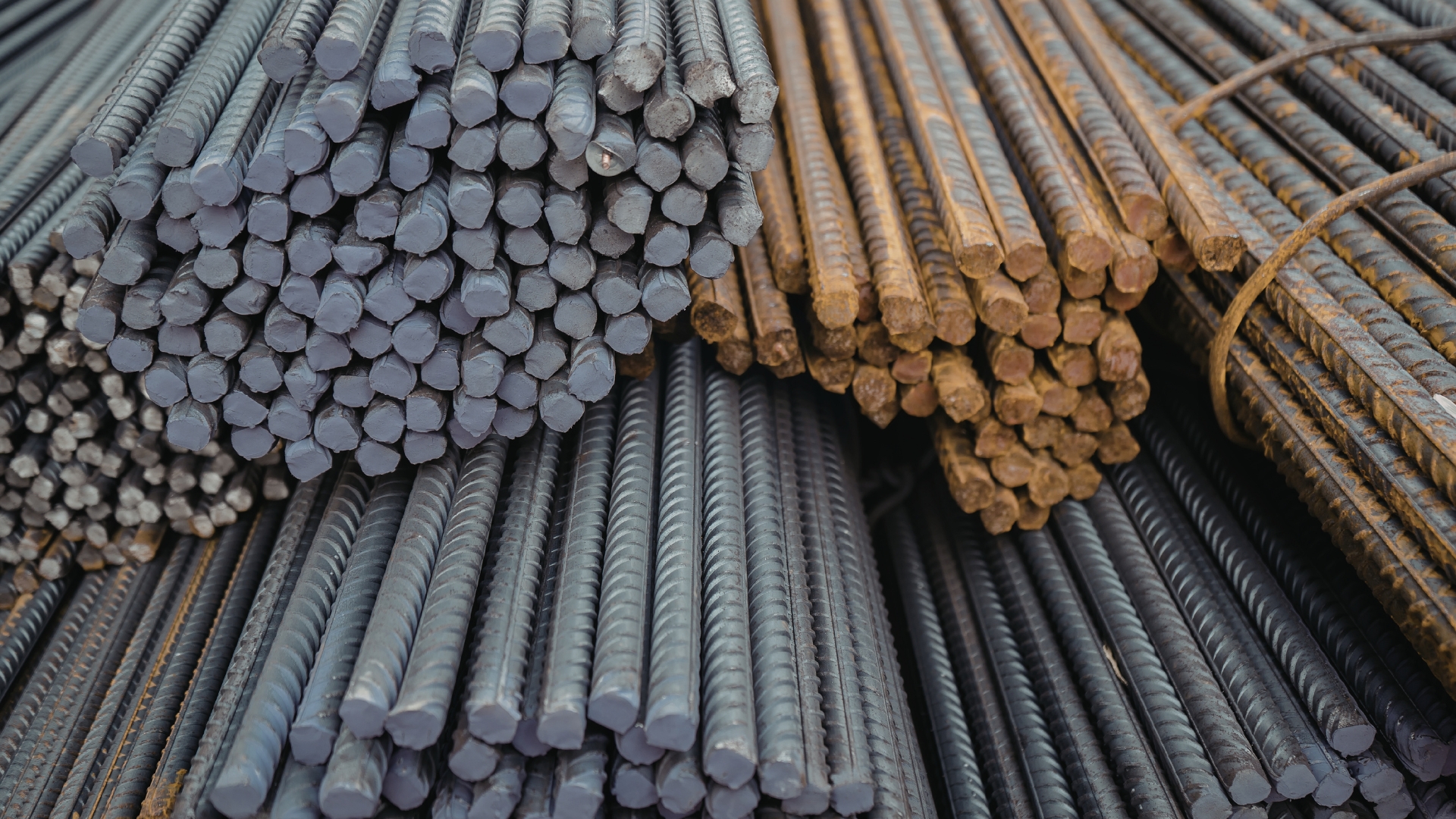
Reinforcement is not just a material, it is an entire design discipline. The selection of bar sizes, layouts, and connections all contribute to whether a structure performs under load, resists cracking, and remains durable over decades.
Importance of Reinforcement
The use of reinforcement bars is fundamental in modern structural design. Reinforcement bars provide the tensile strength that concrete lacks. Without it, most concrete structures would be prone to cracking, deformation, or even collapse under load. Reinforcement is especially critical in load-bearing components such as beams, columns, and slabs, where tensile forces dominate.

Proper design and placement of reinforcement also enhance the ductility of a structure, making it more resilient to dynamic forces such as wind, traffic loads, or seismic activity.
Types of Reinforcing Bars
There are different types of rebars used depending on the application:
- Mild Steel Bars: Smooth-surfaced bars used in low-stress applications.
- Deformed Bars: High-yield bars with surface deformations for better bonding.
- TMT Bars (Thermo-Mechanically Treated): Common in modern construction, combining strength and ductility.
- Epoxy-Coated Rebars: Used in environments exposed to moisture or chemicals.
- Stainless Steel Rebars: Highly resistant to corrosion, used wherever long-term durability is required, particularly in concrete structures with increased permeability, high water-cement ratios, or permanent moisture exposure.
- Welded Wire Fabric (WWF): Pre-fabricated mesh used mainly in slabs and walls.
Selecting the right type of bar is critical to achieving the desired structural performance, especially in environments with unique conditions such as marine, industrial, or seismic zones.
Reinforcing Bar Diameters: What You Need to Know
Reinforcing bar diameters are one of the most crucial decisions in structural design. The size of a bar determines its load-carrying capacity and affects spacing, cover, and concrete volume. Bar diameters must be selected according to structural calculations and design codes, such as Eurocode 2 (EN 1992) or ACI 318.
Standard Rebar Diameters
In Europe, rebar diameters typically range from ⌀6 mm to ⌀40 mm, increasing in 2 mm increments:
- Common sizes: 8, 10, 12, 14, 16, 20, 25, 32, 40 mm
- For slabs and walls: ⌀8–⌀16 mm (most commonly used for primary reinforcement in slabs and walls)
- For columns and beams: ⌀12–⌀32 mm (commonly used ranges, with larger diameters applied where required by high loads)
Bar selection is affected by:
- Structural load paths
- Anchorage and lap length requirements
- Concrete cover and spacing
- Constructability and congestion risk
Selecting the appropriate reinforcing bar diameters also impacts the ease of installation and long-term durability of the structure.
Reinforcement Bar Size Chart and Rebar Sizes Table
For engineers and detailers, having a quick reference reinforcement bar size chart is essential. These charts include data like diameter, cross-sectional area, and unit weight, which are critical during quantity take-offs and detailing.
Example: Rebar Sizes Table
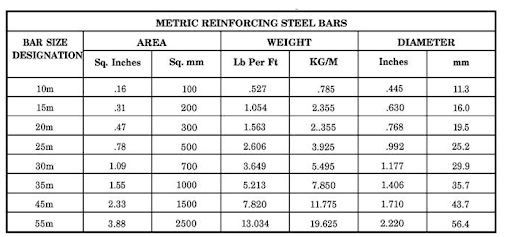
These values are used for both structural calculations and procurement. Understanding how to use this data in practical scenarios can save both time and money.
It is important to note that the reinforcing bar diameter used in calculations is the nominal diameter, which is defined based on the bar’s cross-sectional area, not its actual geometric shape. In reality, reinforcing bars are not perfectly round due to ribs and deformations, which means the physical diameter measured with calipers differs from the nominal value used in design.
Structural calculations, reinforcement ratios, and load-bearing capacity are always based on the nominal diameter and nominal cross-sectional area, as defined by standards such as Eurocode 2. This distinction is critical for accurate design, quantity take-offs, and compliance with codes.
In practice, confusion between nominal and actual bar geometry can lead to incorrect assumptions during detailing, procurement, or site checks. That is why engineers and detailers always rely on standardized rebar size tables rather than physical measurements of the bar profile.
Splicing Reinforcement Bars: Laps vs Couplers
When reinforcement bars need to be extended due to length constraints or structural sequencing, splicing methods are used. The two most common techniques are lap splicing and mechanical splicing (couplers).
Lap Splicing
This traditional method involves overlapping two bars over a calculated length, allowing the bond with concrete to transfer the load between them. While cost-effective and easy to implement, lap splicing requires sufficient space and can lead to congestion in high-density zones such as column-to-beam joints.
Limitations of Lap Splicing:
- Requires longer bar lengths
- Increases steel consumption
- Not suitable for confined or congested areas
- Less reliable in seismic applications or high-load transfer zones
In some structures, improper lap splicing has led to serviceability issues and reinforcement failure. That’s why it’s essential to follow code-specified lap lengths and ensure lap zones are not congested or misaligned.
Mechanical Splicing Using Couplers
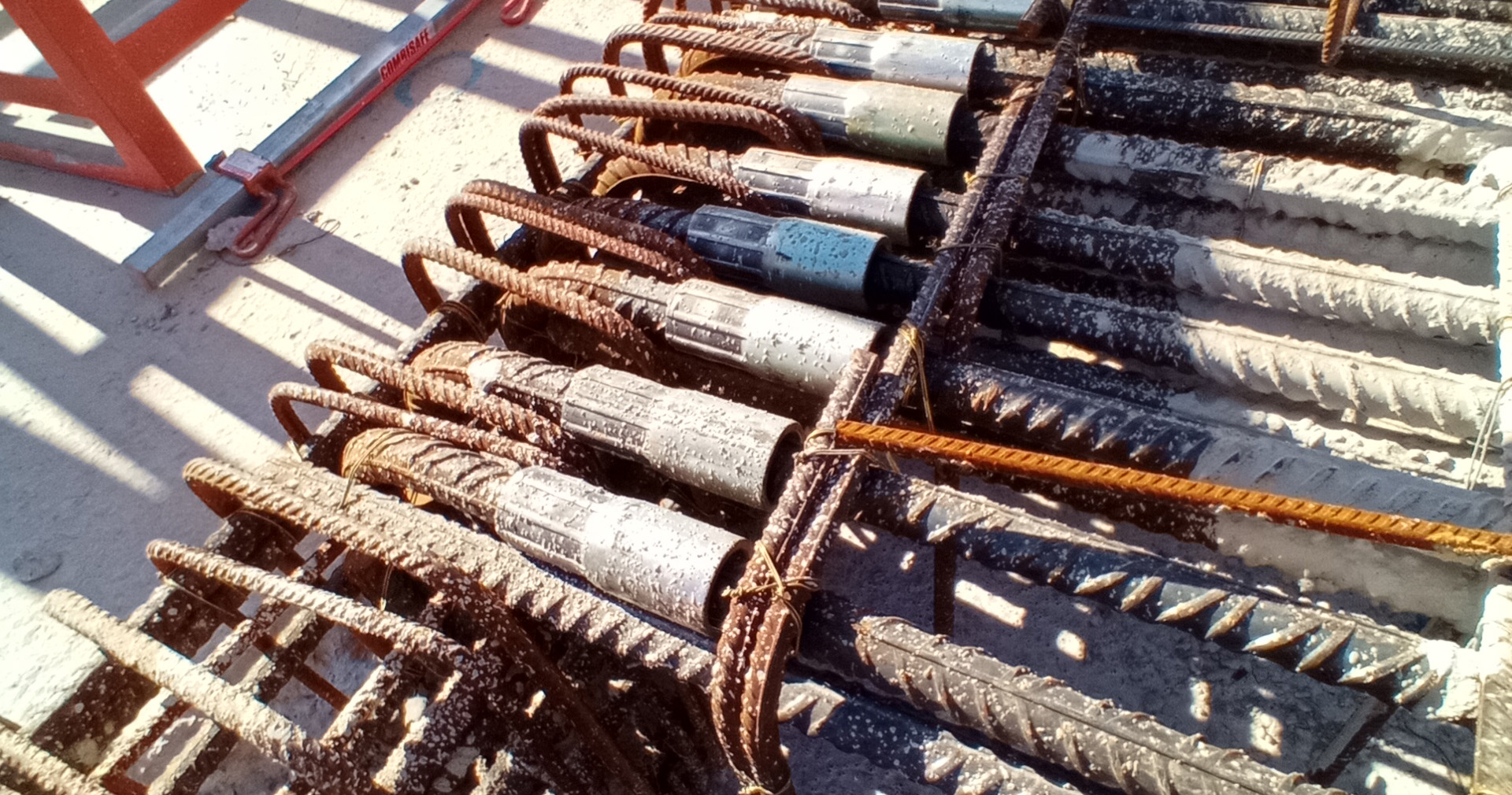
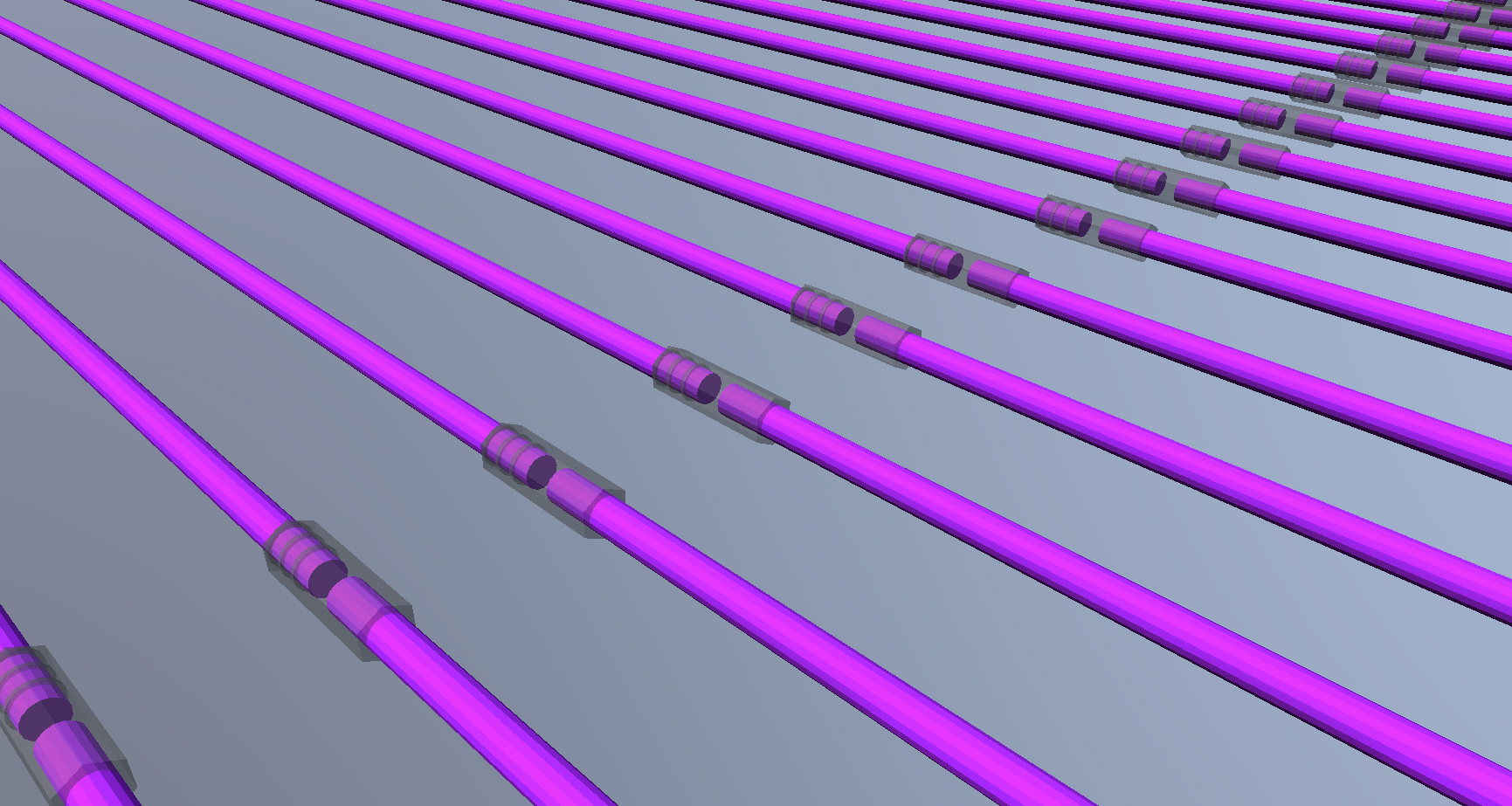
Reinforcing bar couplers offer a compact and efficient alternative to lap splicing. They mechanically join two bars end-to-end, ensuring direct load transfer through the steel rather than through the surrounding concrete.
Why Use Couplers?
- Space efficiency: Reduces rebar congestion, especially in columns and wall intersections
- Material savings: Eliminates long lap lengths
- Ease of prefabrication: Ideal for precast elements and phased construction
- Improved alignment: Better control over bar positioning
- Code compliance: Often preferred in seismic zones and high-load areas
Types of Rebar Couplers
- Threaded Couplers: Require threads on bar ends, screwed into the coupler body
- Grout-Filled Couplers: Bars are inserted into sleeves and filled with high-strength grout
- Swaged Couplers: Mechanical deformation locks the bars into the coupler using hydraulic pressure
- Welded Couplers: Bars are joined by welding into a steel sleeve (less common due to labor and inspection needs)
Mechanical couplers must be carefully selected and installed according to manufacturer guidelines and applicable standards. Each type serves different structural needs and site conditions.
Practical Use of Reinforcement Bars in Concrete Structures
While codes dictate minimum reinforcement ratios and bar spacing, the real challenge lies in execution. Proper rebar detailing ensures that the structure can be built as designed, with clarity on anchorage, laps, spacing, and placement.
Key Detailing Considerations:
- Anchorage Zones: Ensure proper embedment and hook configurations
- Bar Bending Schedules: Must be accurate and matched to bar shapes
- Concrete Cover: Critical for durability, fire resistance, and bond
- Rebar Congestion: Avoid placing too many bars in one zone
- Openings and Penetrations: Coordinate reinforcement around them
These considerations must be reflected in the drawings, bar schedules, and communicated clearly with construction teams.
Reinforcement in Different Structural Elements
Slabs
- Use smaller diameters (⌀8 – ⌀16 mm)
- Distribution and main bars depending on span and loading
- Often double-layered (top and bottom)
Beams
- Larger diameters (⌀12 – ⌀25 mm)
- Stirrups for shear resistance
- Compression and tension zones must be clearly detailed
Columns
- High axial loads → ⌀20 mm and above
- Tied with stirrups or spirals for confinement
- Bar couplers often used for vertical continuity
Walls and Shear Walls
- Double-layer reinforcement
- Horizontal and vertical bars with seismic detailing if required
- Extra attention to wall-slab connections
Planning Rebar Detailing for Constructability
Good rebar detailing is not just about accuracy, it’s about constructability. Can the structure be built the way it’s drawn? Will it allow proper concrete flow? Will bars clash with formwork or MEP systems? Answering these questions early prevents costly on-site fixes.
Rebar drawings should include:
- Section views and detailed annotations
- Bar shape codes and cutting lengths
- Construction joints and pour breaks
- Phasing notes if necessary
Software and Tools Used in Rebar Detailing
Today, most rebar detailing is done using specialized software.
Popular tools include:
Choosing the right tool depends on project size, BIM requirements, and integration with other disciplines.
Site Execution and Quality Control in Reinforcement
High-quality rebar detailing must be matched with careful site execution. It is not enough to deliver clean drawings, they must be interpreted and followed accurately.
Best Practices On Site:
- Verify bar markings against schedules
- Use proper storage to prevent corrosion
- Follow cover blocks and spacing controls
- Inspect laps, splices, and coupler zones before pouring concrete
Quality control measures such as pre-pour inspections and bar scanning (ferroscan) can further ensure compliance and structural reliability.
Why Reinforcement Detailing Quality Matters
A poorly detailed reinforcement layout can lead to:
- Site confusion and delays
- Rebar clashes and misalignment
- Increased material waste
- Structural defects like cracking and spalling
In contrast, high-quality reinforcement bar detailing ensures:
- Smooth on-site execution
- Accurate bar cutting and bending
- Better coordination with other disciplines (MEP, formwork)
- Compliance with design intent and structural codes
Long-Term Benefits of Accurate Rebar Detailing
Beyond immediate constructability, accurate rebar detailing has lasting benefits:
- Better structural performance under dynamic loads
- Lower maintenance and fewer repairs
- Improved durability in aggressive environments
- Predictable material usage and budgeting
It’s a value-added process that starts in the design office but pays off on site and throughout the structure’s service life.
Conclusion
Reinforcement bars may not be visible once concrete is poured, but their placement and logic define whether a structure will perform safely, durably, and cost-effectively.
Understanding the nuances of reinforcing bar diameters, selecting the right reinforcement bar size chart, applying reinforcing bar couplers when needed, and using proper detailing tools, all contribute to building structures that last.
When it comes to rebar, what you don’t see matters most.
FAQ
What is a reinforcing bar and why is it used in concrete?
A reinforcing bar is a steel bar used to increase the tensile strength of concrete, allowing reinforced concrete structures to safely resist tensile and shear forces.
How are reinforcing bar diameters selected in concrete structures?
Reinforcing bar diameters are selected based on structural loads, design calculations, spacing requirements, concrete cover, and constructability considerations defined by applicable design codes.
What is the difference between nominal and actual reinforcing bar diameter?
The nominal diameter is defined by the bar’s cross-sectional area and is used for structural calculations, while the actual bar geometry includes ribs and deformations and is not used for design checks.
When should reinforcing bar couplers be used instead of lap splicing?
Reinforcing bar couplers are used when reinforcement continuity is critical, especially in heavily loaded elements, congested zones, seismic areas, or phased construction.
Why is rebar detailing important for construction site execution?
Rebar detailing ensures reinforcement can be placed correctly on site, reducing clashes, installation errors, and rework while maintaining compliance with structural design and tolerances.
