
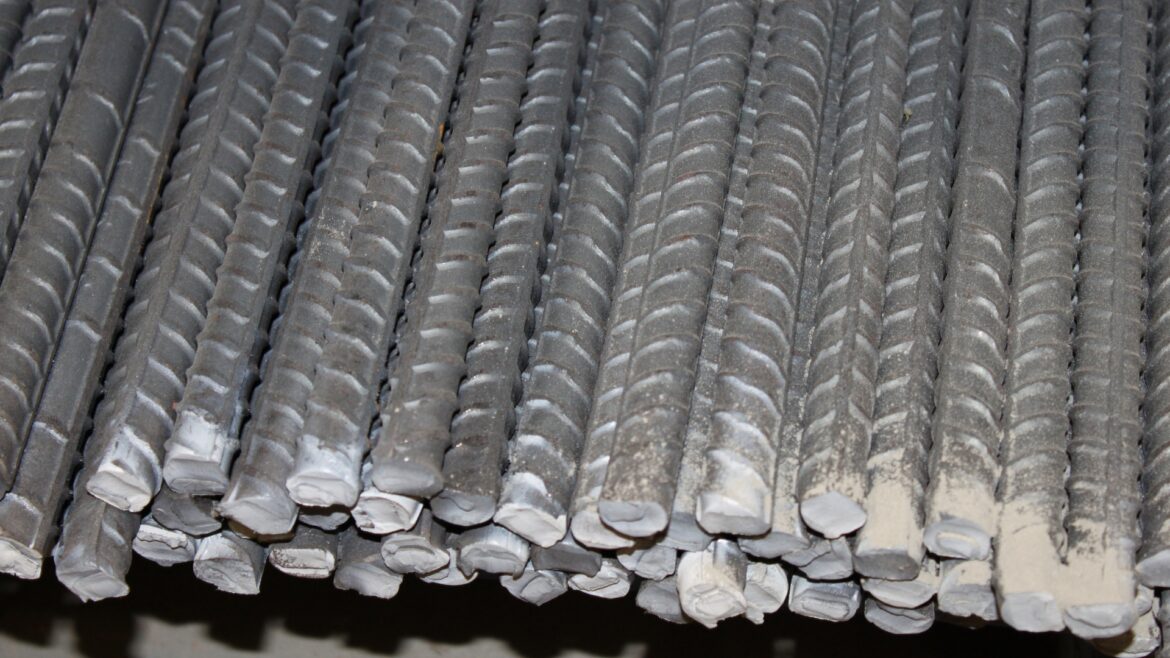
Lap Splice Length: Complete ACI 318 & Eurocode 2 Guide
Overview
On almost no reinforced-concrete structure does the reinforcement arrive in a single continuous length.
Production limits, transport restrictions, and on-site handling all force the same compromise: bars are joined by overlapping them, in what detailers and engineers call a lap splice. For that joint to transfer force safely from one bar to the next, it has to overlap by a calculated distance – the lap splice length.
This guide explains what lap splice length is, the factors that govern it, how the two dominant codes, American ACI 318 and European Eurocode 2, approach the calculation, and where a lap splice length calculator earns its place in a modern BIM workflow. It is written for the people who actually have to detail the bars, not just specify them.
What Is Lap Splice Length?
Lap splice length is the minimum distance over which two reinforcing bars must overlap so that load is reliably transferred between them through bond, the mechanical interlock and adhesion between the steel and the surrounding concrete. It looks like a trivial detail, but it is not. Getting it right has a direct, measurable effect on the safety, durability, and economy of the structure.
Why Bars Are Spliced, Not Continuous
Rebar is manufactured, transported, and installed in finite lengths – typically 12 metres in most markets. A column that rises forty storeys, a slab that spans a full bay, or a continuous foundation beam cannot be reinforced with one unbroken bar.
Wherever one bar ends and the next begins, the design must guarantee that the tension or compression force keeps flowing across the gap. The lap splice is the most common way to do that, precisely because it needs no couplers, no welding, and no special equipment – only correct geometry.
 Why the Length Matters
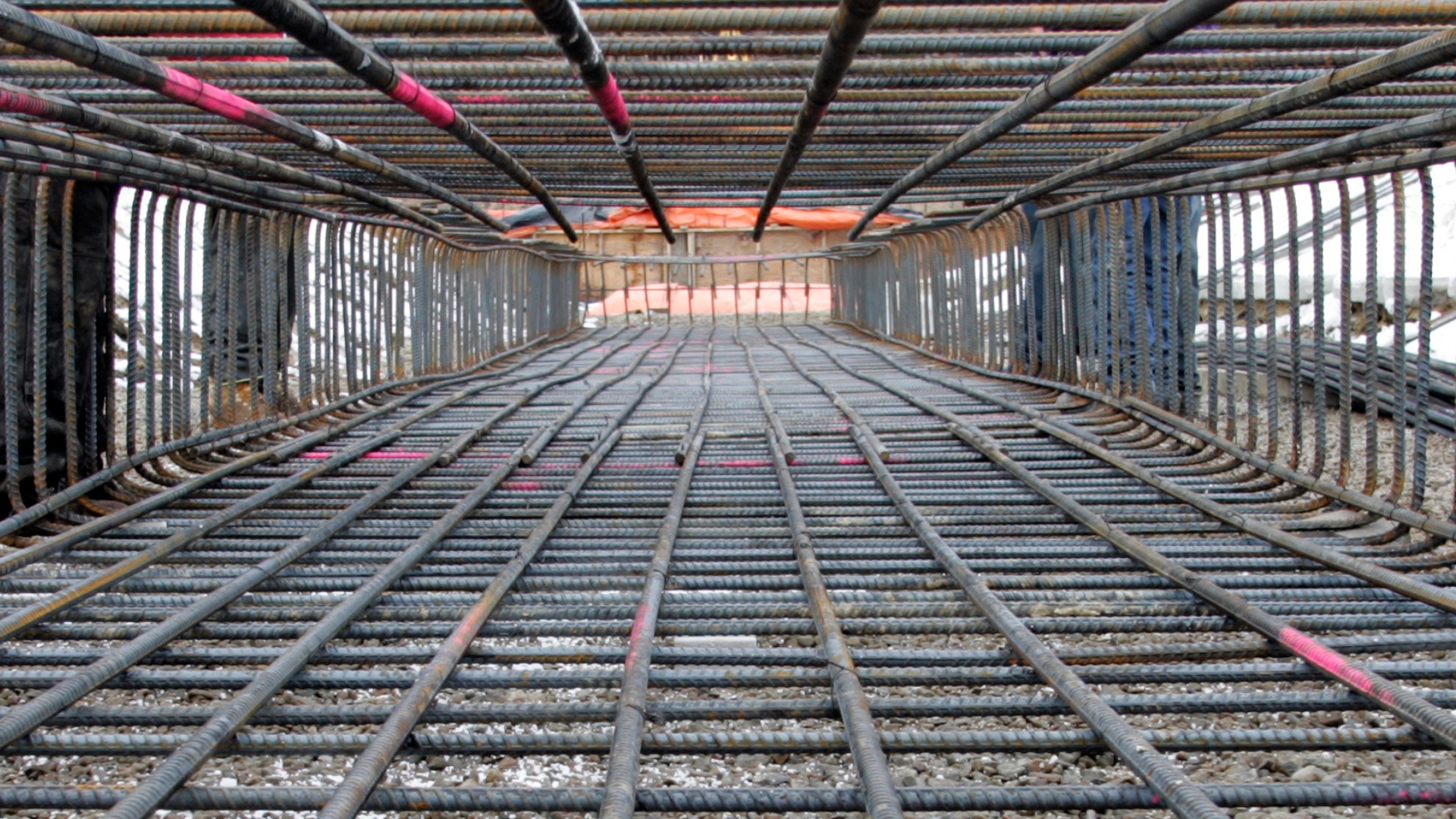 Why the Length Matters
Too short a splice and the bars pull apart before reaching their design capacity; cracks open, stiffness drops, and in the worst case the member fails below its rated load. Too long a splice and you waste steel, congest the section, and make concrete placement harder.
The correct lap splice length is the point where structural reliability and material economy meet. That balance is exactly why the calculation deserves attention rather than a rule-of-thumb “40 diameters and move on”.
Lap Splice vs Mechanical Splice (Couplers)
A lap splice is not the only way to join reinforcement. In practice a rebar splice belongs to one of three families: the lap splice, the mechanical splice, and the welded splice. Choosing between them is part of the detailing decision, not an afterthought.
Lap Splice
The lap splice overlaps two bars and relies on bond to transfer force, as described above. It is the cheapest option, needs no special equipment, and is the default for small and medium bars. Its costs are the steel consumed by the overlap and the congestion it adds to the section, both of which grow with bar diameter.
Mechanical Splice (Couplers)
A rebar mechanical splice joins two bars end to end with a coupler, a threaded or swaged sleeve, instead of overlapping them. Because a rebar splicing coupler transfers force directly through the connector, it needs no overlap and adds no extra reinforcing bar splice length to the design at all. Couplers earn their keep exactly where laps struggle: large-diameter bars (Ø32 and up), heavily congested columns, seismic zones that demand full mechanical continuity, and staged construction where a bar must be connected later.
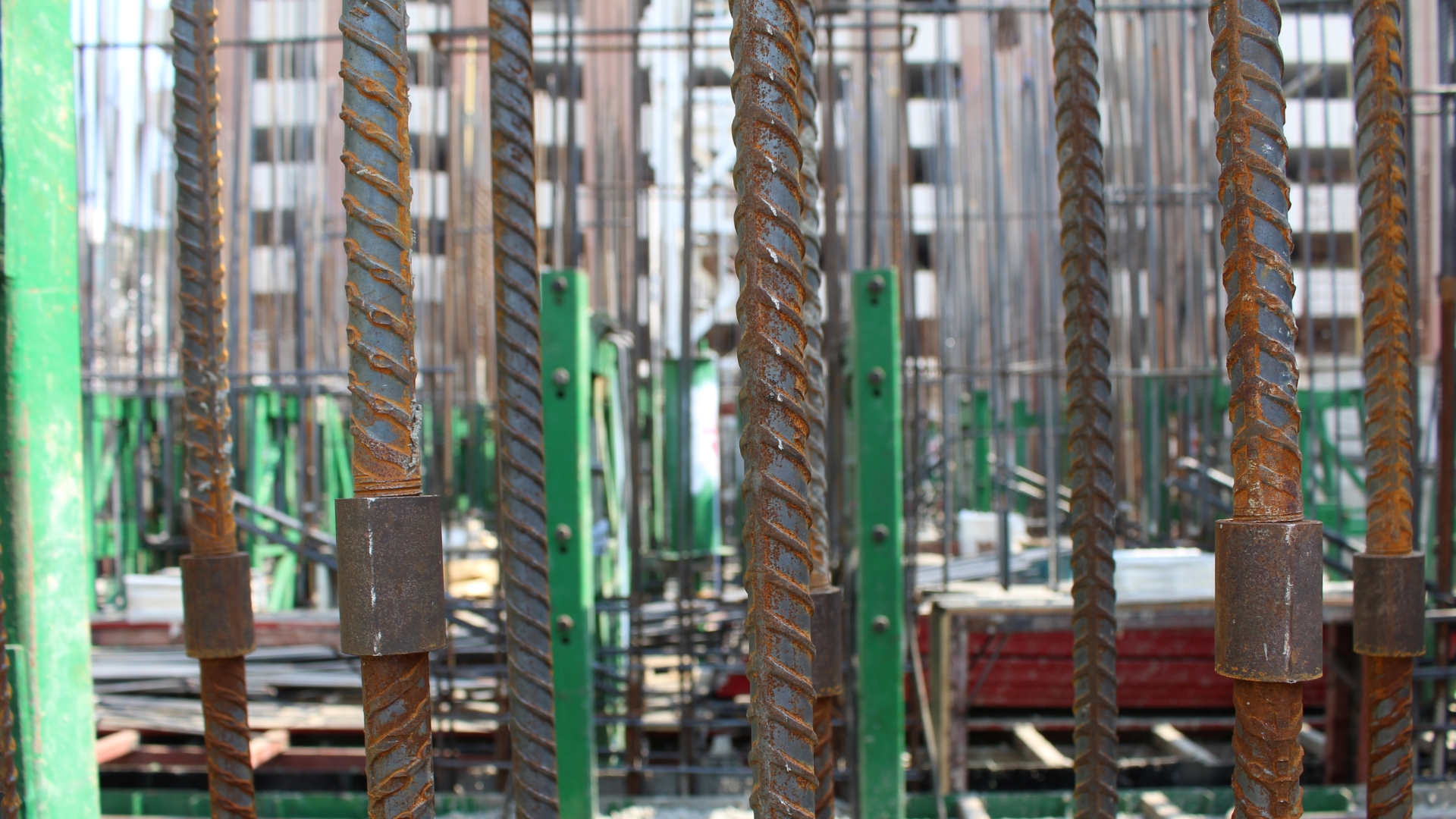
When to use which
A useful rule of thumb: small diameter with room to overlap favours the lap splice; large diameter, severe congestion, or a seismic demand favours the rebar mechanical splice.
Welded splices remain a niche option, viable only with weldable steel grades and strict procedure control.
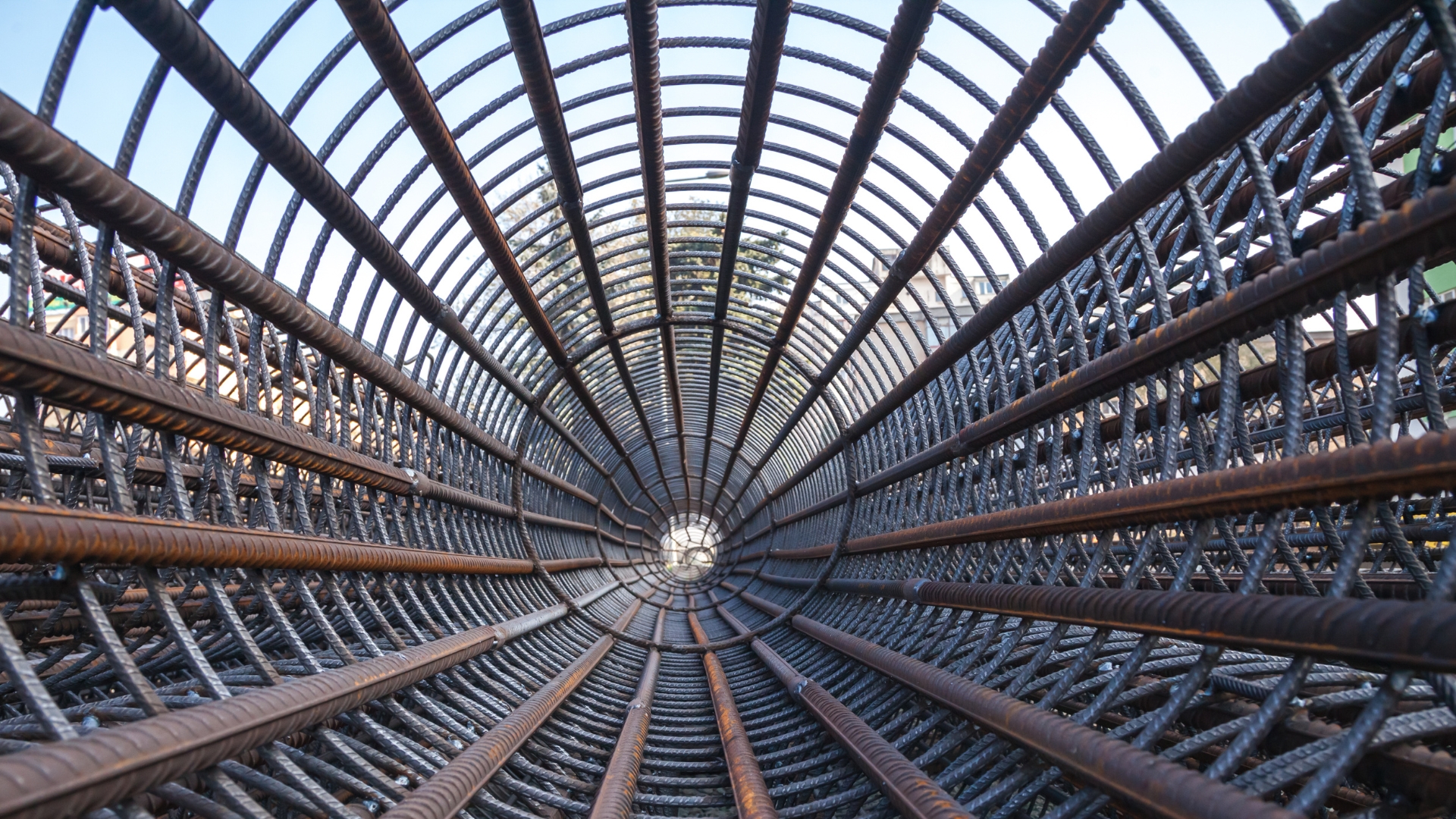 The reinforcing bar splice length you calculate for a lap is therefore also a cost signal, once that length starts wasting steel or jamming the cage, a coupler is usually the better engineering answer.
Factors That Govern Lap Splice Length
The required overlap is never a single number. It is the product of several parameters, and changing any one of them shifts the result. A 10 mm bar in good concrete behaves nothing like a 25 mm bar in poor casting conditions.
Rebar Characteristics
- Bar diameter (Ø): the single largest driver. A larger diameter carries more force and needs a longer overlap to transfer it. Required length scales roughly with diameter.
- Steel grade: higher-yield steel develops more force per bar, which lengthens the splice for the same diameter.
- Surface – ribbed vs plain: ribbed (deformed) bars develop far better bond than smooth bars, so a deformed-bar lap splice length is markedly shorter than the plain-bar equivalent.
Concrete Characteristics
- Concrete class and compressive strength: stronger concrete grips the bar better, shortening the required overlap. Bond strength rises with the square root of compressive strength in both codes.
- As-placed quality: honeycombing, poor compaction, or inadequate curing degrade the real bond well below the design assumption, a frequent and under-appreciated source of trouble.
Geometry of the Element
- Concrete cover: thicker cover confines the bar and resists splitting, allowing a shorter splice.
- Clear spacing between bars: wider spacing improves confinement; congested bars need more length.
- Member thickness: drives both achievable cover and casting position.
Loading Conditions
Whether the rebar lap splice length sits in a tension or a compression zone changes everything, tension splices are always the more demanding case. Static versus dynamic (fatigue, seismic) loading raises the bar further. Splicing tension reinforcement is not the same problem as splicing a column’s compression bars, and the calculation reflects that.
The shared logic across every code is consistent: larger diameter demands a longer splice, while higher-quality concrete allows a shorter one, and poor casting conditions or thin cover push the required length back up.
How to Calculate Lap Splice Length – ACI 318 vs Eurocode 2
Internationally, two standards dominate splice design: the American ACI 318 and the European Eurocode 2 (EN 1992-1-1). Both pursue the same goal, a safe force transfer but they reach it by different routes.
The ACI 318 Approach
ACI 318 builds the splice on the concept of development length (the length a bar needs to develop its full yield strength in the concrete). The tension lap splice length per ACI 318 is then a multiple of that development length, typically a Class A or Class B splice factor (1.0 or 1.3) applied on top of it. The development length itself is a function of:
- bar diameter,
- steel grade (yield strength),
- concrete compressive strength,
- bar position during casting (the “top bar” effect),
- bonding and coating conditions,
- the type of stress (tension or compression).
ACI 318 has a reputation for being the more conservative of the two. That conservatism is deliberate: it hands the designer extra margin, which is welcome on members carrying heavy tension forces or in conditions where construction quality is hard to police.
The Eurocode 2 Approach
Eurocode 2 starts from the design bond strength between bar and concrete and derives a basic anchorage length from it, then modifies that length for the real configuration. Its inputs are:
- concrete quality
- reinforcement type,
- bar diameter,
- the percentage of bars lapped at the same section,
- bar position during placement (good vs poor bond conditions),
- the actual utilisation ratio of the reinforcement.
Because Eurocode 2 examines the genuine bond conditions and how hard the steel is actually working, it frequently permits optimisation. Shorter, leaner lap splice length than the ACI equivalent for the same bars and concrete. That can translate directly into steel savings on a large project.
ACI 318 vs Eurocode 2
| Aspect | ACI 318 | Eurocode 2 |
|---|---|---|
| Core concept | Development length × splice factor | Design bond strength → anchorage length |
| Typical result | More conservative (longer) | Often optimised (shorter) |
| Treats casting position | Top-bar factor | Good / poor bond conditions |
| Models steel utilisation | Indirectly | Explicitly |
| Best fit | Heavy tension, quality-uncertain sites | Optimisation, well-controlled projects |
Knowing how to calculate lap splice length under both codes is not academic. On international projects the governing code is dictated by the client or jurisdiction, and a detailer who can move fluently between the two avoids both under-design and wasted steel.
The Lap Splice Length Calculator – Workflow & BIM
With this many interacting parameters, manual calculation for every bar mark is slow and error-prone. That is precisely the gap a lap splice length calculator fills: the user enters the basics – bar diameter, concrete class, casting position, and chosen code – and the tool returns the required overlap automatically, removing the arithmetic and the transcription mistakes that come with it.
Speed is only the first benefit. A good calculator also lets you compare results across codes side by side, optimise the steel quantity, and sanity-check a design decision in seconds rather than minutes. Those gains compound across a project with thousands of splices.
Tools We Use – Tekla, Revit, Allplan
The real value appears inside a BIM environment. When reinforcement data lives in the model rather than on a detached spreadsheet, the splice calculation can be tied directly to the digital model of the structure.
In Tekla Structures, Revit, and Allplan, this means lap detailing, bar quantities, and clash conditions can be checked automatically during design, long before any work starts on site.
A change to a concrete class or a bar diameter ripples through every dependent splice instead of triggering a manual re-check.
NS Drafter Experience
In our rebar detailing work, we treat the lap splice length not as an afterthought but as a parameter governed from the model.
Bars are spliced against the project’s governing code, lap zones are positioned where the design intends, and quantities reconcile automatically with the bending schedule.
That discipline is what keeps a 300,000-element model consistent from the first splice to the last, and what keeps the bar list on the drawing matching the steel that actually shows up on the truck.
Results, Site Reality, and Common Mistakes
A correctly defined rebar lap splice length does more than satisfy a checklist, it removes the temptation to improvise on site. One of the most common field errors is arbitrarily shortening a lap to save a few metres of steel or to ease a congested cage. It feels harmless. It is not: an under-length splice can crack, lose stiffness, and reduce the load capacity of the very element it was meant to strengthen.
The mistakes we see most often when auditing reinforcement documentation fall into a short, repeatable list:
- Splice shortened on site without recalculation, to save steel or ease placement.
- Wrong code assumed – ACI laps detailed against a Eurocode brief, or vice versa.
- Casting position ignored – top bars treated as bottom bars, dropping the required length.
- Concrete class change not propagated – laps left at the old, now-unsafe value after a mix downgrade.
- All bars lapped in one section, when staggering would have allowed a shorter, less congested splice.
This is why a lap splice length calculator is no longer just a convenience for the designer. It is a component of the wider digitalisation of construction: it improves the accuracy of the documentation, tightens quality control, and leads to more rational use of material. In an industry under constant pressure to deliver more precision and more productivity, tools that lock the calculation into the model – and out of the realm of on-site guesswork – have become part of standard engineering practice.
FAQ
What is lap splice length in reinforced concrete?
Lap splice length is the minimum distance over which two reinforcing bars overlap so that force can transfer between them through bond with the surrounding concrete. It allows finite-length bars to act as if continuous, and its value depends on bar diameter, steel grade, concrete strength, cover, spacing, and whether the bars are in tension or compression.
How do you calculate lap splice length?
You calculate it under a governing code, usually ACI 318 or Eurocode 2. ACI 318 derives it from development length multiplied by a splice class factor; Eurocode 2 derives it from the design bond strength between bar and concrete. Both account for diameter, concrete quality, casting position, and the type of stress. A lap splice length calculator automates these formulas to reduce error.
What is the difference between ACI 318 and Eurocode 2 lap splice length?
ACI 318 is generally more conservative and produces longer splices, giving extra safety margin. Eurocode 2 examines real bond conditions and the actual utilisation of the reinforcement, so it often allows a shorter, optimised lap splice length for the same bars and concrete.
Does a larger bar diameter need a longer lap splice?
Yes. Bar diameter is the dominant factor. A larger diameter carries more force and therefore requires a longer overlap to transfer that force into the concrete. Stronger concrete works in the opposite direction, allowing the required length to be reduced.
What is the difference between a lap splice and a rebar mechanical splice?
A lap splice overlaps two bars and transfers force through bond with the concrete, so it requires a calculated lap splice length. A rebar mechanical splice joins the bars end to end with a rebar splicing coupler, transferring force through the connector with no overlap. Couplers are preferred for large-diameter bars, congested sections, and seismic continuity, where the reinforcing bar splice length of a lap would waste steel or be impractical.
Can lap splice length be shortened on site to save steel?
No. Shortening a lap below its calculated value is a serious error. An under-length splice can crack, lose stiffness, and reduce the member’s load capacity. Any change to a splice must be recalculated against the governing code, not improvised in the field.
About Us
NS Drafter specializes in BIM modeling, rebar detailing, steel detailing, and construction documentation for residential, commercial, and complex infrastructure projects. Our teams work across Revit, AutoCAD (ArmCAD), Tekla, and Allplan, delivering models and plans depending on project requirements.
Ready to improve your BIM modeling workflow or start your first fully modeled project? Get in touch and let’s talk about where to start.
