
Sustainable Rebar Detailing: Proven Ways to Cut Waste & Cost
Overview
Sustainable rebar detailing is becoming a contractual requirement. As embodied-carbon targets, LEED credits, and material-cost pressures converge on structural projects, the way reinforcement is modeled and scheduled has a direct, measurable impact on how much steel ends up in a dumpster rather than in a structure.
Reinforcing steel accounts for a disproportionate share of a concrete structure’s embodied carbon, simply because steel production is energy-intensive. Every ton of rebar that is over-ordered, cut into unusable offcuts, or duplicated due to a modeling error carries its carbon footprint with it, whether it’s installed or scrapped.
Why Sustainability Matters in Rebar Detailing
Technical Details
Steel manufacturing is responsible for , and reinforcing steel is one of the largest single material categories by mass on most concrete structures. Unlike finishes or MEP components, rebar is baked into the structure early and cannot be easily substituted after design freeze, which means sustainability decisions made during detailing have outsized, permanent consequences.
Sustainable rebar detailing addresses this at the only stage where it’s still cheap to fix: before fabrication.
A bar that’s optimized in the model never gets cut wrong, never gets over-ordered, and never becomes scrap steel sitting in a site container.
Industry Context
Owners and design teams are no longer treating this as optional. Green building certifications increasingly tie point allocations directly to material efficiency and recycled content, and general contractors are starting to request waste-tracking data as part of standard reinforcement submittals.
A rebar detailer who can document waste reduction alongside a bar bending schedule is answering a question the project team is already being asked to report on.
Where Rebar Waste Actually Comes From
Reinforcement waste on conventional projects is a real, recurring cost, not a rounding error, and it consistently traces back to the same handful of causes:
- Design-stage duplication (bars modeled twice across disciplines or revisions that never get reconciled).
- Poor cutting optimization (standard bar lengths cut without stock-length planning, leaving unusable offcuts).
- Over-ordering as a buffer (fabricators and contractors padding quantities to avoid site delays, without model-based confidence in the take-off).
- Splice and lap inefficiency (lap lengths detailed conservatively across an entire structure instead of zone-by-zone, based on actual load paths).
- Field rework (reinforcement that doesn’t fit as detailed and gets re-cut or re-bent on-site).
None of these are material problems. They are all detailing and coordination problems, which means they are solvable at the modeling stage, before a single bar is fabricated.

BIM-Driven Optimization
Sustainable rebar detailing starts with modeling every bar directly in a coordinated 3D model, not drafting it as a byproduct of 2D drawing production. When quantities, cutting lists, and bar bending schedules are generated straight from that model instead of assembled from separate drawing sets, the duplication and reconciliation errors that drive most waste simply don’t occur.
BIM-driven optimization also makes cutting-length planning possible at a scale manual detailing can’t match.
Instead of detailing each bar mark in isolation, the model can group bars by stock length, flag near-duplicate marks for consolidation, and surface splice zones where lap length can legitimately be shortened based on actual load demand rather than a blanket conservative assumption.
Nine Practices Our Engineers Apply for Sustainable Rebar Detailing
These are procedures our team runs as standard practice, built primarily around Tekla Structures – though most of the underlying checks have direct equivalents in Revit, Allplan, and other BIM-based reinforcement workflows.
- Splice & Lap Length Optimization. Splice positions and lap lengths are applied according to project standards, code requirements, and maximum fabrication and transportation lengths – reviewed early, not defaulted to a single conservative value across the whole structure. Catching this at the modeling stage avoids rework and the waste caused by incorrectly sized bars.
- Clash Detection & Duplicate Reinforcement Checks. Clash detection isn’t only for embedded items and openings. Running it against the reinforcement itself catches duplicate or overlapping bar positions – one of the most common, and most avoidable, sources of double-counted material and fabrication errors.
- Model-Based Quality Control. Before issuing IFC models, drawings, or bar bending schedules, quantities, zones, and phases get a structured review to confirm the delivered information actually matches the intended project scope. Tekla’s Organizer is built for this; most BIM platforms have an equivalent schedule or filter tool that can serve the same function.
- Bar Mark Consolidation. Reinforcement marks are reviewed and consolidated wherever bars are identical or nearly identical. Fewer unique bar marks means simpler fabrication, better production efficiency, and fewer offcuts.
- Standardization of Reinforcement. Where engineering requirements allow, bar diameters, shapes, and lengths are standardized across similar structural elements. More repetition means faster fabrication, simpler installation, and fewer production errors.
- Constructability Review. Reinforcement layouts are reviewed from the installer’s perspective – is there enough space to place bars, vibrate concrete, and sequence installation properly? A model that reads clean on screen isn’t automatically one that’s easy to build.
- Model Validation Before Deliverables. Concrete covers, clear spacing, anchorage, reinforcement continuity, and coupler locations get a final check before drawings and schedules are generated. Catching these issues in the model takes minutes; catching them during fabrication or on-site costs considerably more.
- Model-Based Quantities. Bar bending schedules and quantities are generated directly from the coordinated model rather than assembled from separate manual take-offs – the single biggest lever for consistency across deliverables and confidence in the numbers going into procurement.
- Revision & Change Management. When a design revision comes in, it’s compared against the existing reinforcement model before any drawing or schedule is touched. Identifying exactly what changed prevents duplicate work and the material waste that comes with re-detailing from scratch.
None of these nine practices are exclusive to green-certified projects – they’re run on every job, which is exactly why sustainable rebar detailing works as a standard methodology rather than a premium add-on.
Tools We Use (Tekla / Revit / Allplan / AutoCAD)
At NS Drafter, sustainable rebar detailing is built around the same core BIM platforms used for structural coordination generally: Tekla Structures for high-detail reinforcement modeling and automated bar list extraction, Revit and Allplan for BIM-integrated reinforcement on architecturally coordinated projects, and AutoCAD where 2D deliverables are still required alongside the model.
Each platform generates bar bending schedules and quantity take-offs directly from the model, which is the mechanism that actually reduces waste – get the model right and the drawing follows, instead of detailing the drawing and hoping the model catches up.
Recycled Steel & Reinforcing Steel Alternatives
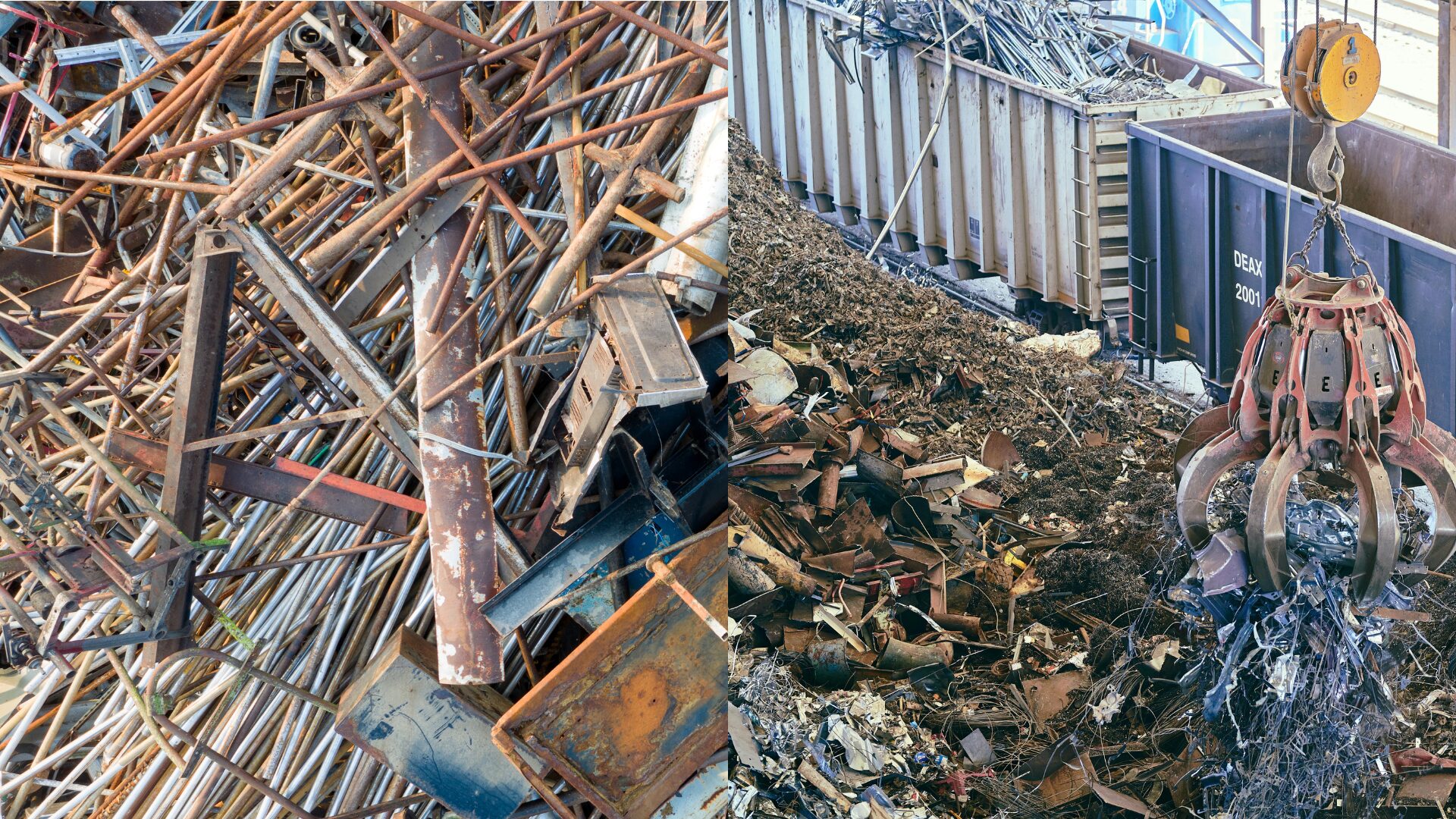
Material choice is the other half of sustainable rebar detailing, alongside detailing methodology. Reinforcing steel produced from recycled scrap through electric arc furnace (EAF) production carries substantially lower embodied carbon than primary steel production – – and . This is one of the more overlooked benefits of using recycled materials in construction: the sustainability gain doesn’t require a new material specification, it requires specifying and verifying recycled content on the mill certificates already being submitted.
 Beyond recycled content itself, sustainable alternatives to steel and shape-optimized reinforcement are gaining traction on demonstration and early commercial projects. Shape-optimized reinforcement – placing steel only where structural analysis shows it’s actually needed, rather than in a uniform grid – . That is not a smaller amount of the same detailing approach; it’s a fundamentally more detailing-intensive process, since every bar has to be individually justified by the load path instead of following a standard pattern.
For rebar detailers, this shifts the value proposition: reducing waste through recycled materials in construction is a specification check, but designing shape-optimized reinforcement is a modeling skill that will separate commodity detailing from the sustainable rebar detailing services owners are increasingly asking for by name.
LEED & BREEAM: Certifications That Reward Optimization
Both LEED and BREEAM allocate credits for material efficiency and recycled content, which means a documented reduction in rebar waste and verified recycled steel content are directly creditable.
Under LEED, , and – exactly the outcomes sustainable rebar detailing produces: less material ordered, less material scrapped, and documented recycled content on the reinforcing steel that is installed.
BREEAM applies a similar logic through its materials and waste categories, crediting projects that can demonstrate a measurable reduction in construction waste against a project-specific baseline. For a project team pursuing either certification, a rebar detailing process that already tracks tonnage ordered versus tonnage installed produces the documentation those credits require as a natural byproduct of the workflow, rather than a separate reporting exercise.
This is a practical reason for structural teams to specify sustainable rebar detailing early: the certification paperwork is far easier to produce when waste tracking and recycled content verification are built into the detailing process from the start, instead of reconstructed after fabrication is complete.
Why These Practices Compound
None of the nine practices above work in isolation. Duplicate-mark elimination, cutting-length optimization, and splice-zone review each address a different source of waste, so applying them together produces a larger effect than any single practice on its own, they act on separate causes rather than competing for the same savings.
That waste reduction comes entirely from applying sustainable rebar detailing practices to a standard structural design, not from a change in reinforcing steel specification or material substitution. That’s the core argument for treating this as a detailing methodology rather than a material choice: the savings are available on almost any project, independent of whether the owner has a formal green building target.
FAQ
Does sustainable rebar detailing require a different reinforcing steel specification? No. Most measurable waste reduction comes from detailing-stage optimization – cutting-length planning, clash resolution, and splice review – not from changing the steel itself. Recycled content, where specified, is typically already present in standard EAF-produced reinforcing steel and simply needs to be verified on mill certificates.
Do LEED or BREEAM give credit for reduced rebar waste specifically? Yes, indirectly. Both systems credit construction waste reduction and recycled material content at the project level. Documented rebar waste tracking and verified recycled steel content feed directly into those credit categories.
Is shape-optimized reinforcement realistic for standard commercial projects, or only for demonstration projects? Currently it is more common on demonstration and specialized projects because of the additional detailing effort required, but the underlying modeling techniques are increasingly available in mainstream BIM platforms, making broader adoption a matter of workflow, not technology availability.
What’s the fastest way to start reducing rebar waste on an active project? The most effective way to reduce reinforcement waste is to focus on careful detailing from the beginning of the project. Designing reinforcement around openings, embedded items, and complex geometries with constructability in mind minimizes the need for manual cutting, additional bending, and on-site modifications while ensuring that all reinforcement positions can be fabricated and installed as intended. Once a well-coordinated reinforcement layout has been achieved, further optimization through cutting-length planning and bar mark consolidation can help reduce offcuts and improve fabrication efficiency, but these measures are most effective when built upon a carefully detailed reinforcement model.
About Us
NS Drafter specializes in BIM modeling, rebar detailing, steel detailing, and construction documentation for residential, commercial, and complex infrastructure projects. Our teams work across Revit, AutoCAD (ArmCAD), Tekla, and Allplan, delivering models and plans depending on project requirements.
Ready to improve your BIM modeling workflow or start your first fully modeled project? Get in touch and let’s talk about where to start.
