

Milutin Milanković: The Engineer Who Asked “Why?”
Introduction
Today, we know Milutin Milanković, a civil engineer and scientist, as the man who changed the way we understand Earth’s climatic past. The cycles that explain major climate changes throughout geological history bear his name, and his work places him among the most significant scientists Serbia has given to the world.
But one part of his story has almost disappeared behind that great scientific legacy.
His engineering career was not simply a short episode before science. It was the foundation of a way of thinking that would later take him far beyond civil engineering, all the way to problems encompassing the entire planet.
That is why the story of Milutin Milanković is not simply the story of a scientist who looked to the sky. It is the story of a civil engineer who first learned how a structure works, and then tried to understand how the planet works.
From Vienna: Milutin Milanković, Civil Engineering
Milutin Milanković was born in 1879 in Dalj and studied civil engineering at the Technical University in Vienna.
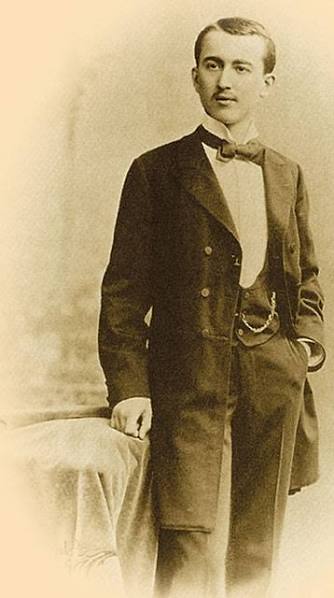
In 1904, he defended his doctoral dissertation in technical sciences, becoming the first Serbian to earn a doctorate in this field. His dissertation, Theory of Pressure Lines, already reflected his interest in one of the fundamental subjects of structural engineering: how forces are transferred through a structure.
In Vienna, he worked as a designer and engineer focused on reinforced-concrete structures, carrying out complex calculations for bridges, aqueducts, roof structures, and industrial buildings. As part of this work, he was also involved in the design of the Belgrade sewage system.
This is an important part of his biography because it shows that Milanković did not know civil engineering only from books. He was first an engineer working in practice.
An Engineer Who Thought Through the Material
At the beginning of the 20th century, civil engineering was at something of a turning point. Steel was making increasingly ambitious structures possible, while concrete – a material known for centuries, was beginning to take on an entirely new role.
Reinforced concrete brought together two seemingly different materials and opened up possibilities that traditional construction methods could not easily provide.
But there was one major difference compared with today: there was no software that could test hundreds of design variations within seconds. There were no BIM models, digital simulations, or automated optimization tools. Engineers had to understand structures almost “from first principles” – how a force moves through an element, where the material is actually doing work, and where it is simply unnecessary weight.
This was the environment in which Milanković emerged. He did not see reinforced concrete simply as a new material, but as a new structural language.
He asked how the same material could be used to create structures that were lighter, more rational, and more efficient. One question interested him in particular:
If every kilogram of concrete costs money, adds load to the structure, and ultimately has to be produced and placed – do we really need every part of it?
This way of thinking led to new solutions.
One of Milanković’s most interesting engineering innovations was his reinforced-concrete ceiling system, developed with Theodor Kreutz. Instead of filling the entire slab with concrete, the system incorporated lightweight bundles of reed or similar insulating material as permanent inserts. The concrete and reinforcement provided the structural capacity, while the inserts reduced unnecessary material and added thermal and acoustic insulation.
Milanković did not stop at the structural concept. He continued refining the system and eventually changed the orientation of the reed bundles so that they ran vertically through the depth of the ceiling. This improved the connection between the inserts and concrete, increased the load-bearing performance, and made it easier to manufacture inserts for different ceiling depths.
He even developed a machine for producing the inserts to the required dimensions. In other words, Milanković was not optimizing a structural element in isolation. He was optimizing the entire construction system – material, structure, insulation, manufacturing and execution.
At first glance, this may look like a simple way to save material. In reality, it reflects one of the fundamental principles of good structural engineering:
Don’t build more than you need, build smarter.
He was trying to understand how the same function could be achieved with less material and a better structural solution. That may be where Milanković’s engineering mindset is most clearly visible.
He looked at how the material behaved, where it was needed, and how geometry could help the material do more.
More than a century later, the same way of thinking lies at the heart of modern structural engineering, from optimized reinforced-concrete sections and prestressed structures to topology optimization, parametric design, and even newer materials like .
The tools have changed. The question has remained the same: how do we create a structure that does more, uses less, and makes smarter use of its materials?
Milanković’s Legacy in Civil Engineering
When Milutin Milanković is discussed today, his contribution to civil engineering almost always remains in the shadow of his later scientific work.
Yet before becoming world-famous for his research into climate change, he had already established himself as a civil engineer, designer, and inventor. His work did not remain theoretical – he designed structures, worked with reinforced concrete, and developed several structural solutions that were protected by patents.
One particularly notable part of his work was his contribution to railway infrastructure, where he designed reinforced-concrete bridges over the Timok River on the Niš-Knjaževac railway line, part of a route that ultimately called for 19 bridges, a scale of project unusual for its time (; ).
But more important than the number of projects was his way of thinking.
For Milanković, a structure was not simply a combination of materials and dimensions, he tried to understand how forces moved through a system and how materials could be used more rationally and efficiently.
This is where the connection between his engineering career and his later scientific work begins. At first, he studied how forces acted on a bridge or a reinforced-concrete slab. Later, he tried to mathematically explain how solar radiation and Earth’s movement influenced climate changes over hundreds of thousands of years ().
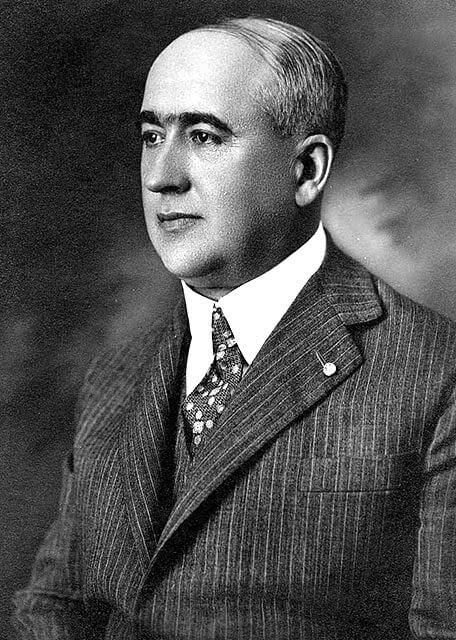
The scale of the problem changed. The way of thinking did not.
That is why his engineering period should not be viewed merely as a prelude to his scientific career. It reveals Milanković as an engineer who constantly tried to understand the system behind a problem and find a better solution.
More than a century later, the tools are different – from manual calculations, we have moved to FEM analysis, , and .
But the question remains the same: how well do we need to understand forces, materials, and systems to create something that will last?
What Can Milanković Teach Today’s Engineers?
Perhaps it is this: don’t limit yourself to the discipline you studied.
Milanković showed that knowledge from one field can become a tool for solving problems in an entirely different one.
- Civil engineering taught him to think about forces, systems, and equilibrium.
- Mathematics allowed him to describe those relationships.
- Astronomy gave him the problem.
The result was a theory that changed the way we understand Earth’s climate history.
This may be one of the most important lessons for today’s construction industry, because the boundaries between disciplines are becoming increasingly blurred. Today, we talk about AI, digital twins, automation, robotics, computational design, and digital manufacturing – the same convergence visible in a project like the , where multiple disciplines had to be resolved in one coordinated model. The most interesting solutions often emerge precisely at the intersection of these fields.
At the same time, today’s engineer is increasingly entering their own digital universe. That is why Milanković should not be seen simply as the man who explained climate change, nor merely as an astronomer or mathematician.
He should be seen as an engineer who never stopped asking “why?”
Why does a structure carry load?
Why does a material behave the way it does?
How can we make a structure more efficient?
And ultimately, how can the same principles be applied to a much larger system, the planet itself?
His journey from reinforced-concrete structures in Vienna to the theory of climate cycles may be one of the best examples of just how far an engineering mindset can take us.
Conclusion
Milutin Milanković began with concrete, reinforcement, calculations, and structures. He designed bridges, developed new reinforced-concrete slab systems, and patented structural solutions.
And then he looked further.
In an era of BIM, AI, digital models, and powerful software tools, technology allows us to calculate more than ever before. But it cannot replace the most important thing:
Software can calculate.
AI can generate.
BIM can coordinate.
But the engineer still has to understand why the structure works.
Milanković started with concrete, and he ended among the stars.
Between those two worlds, he showed just how far an engineering mindset can take us.
